Buying off-plan in Thailand: risks and developer due diligence
Updated · ZODIAC Co., Ltd.
Buying off-plan in Phuket can secure a lower entry price and a choice of units, but you are paying a developer for something that does not exist yet. The main risks are delay, non-completion, changes to the specification and weak contracts. Most can be reduced by checking the land title, EIA and building permits, the developer's track record, and by tying payments to verifiable construction milestones.
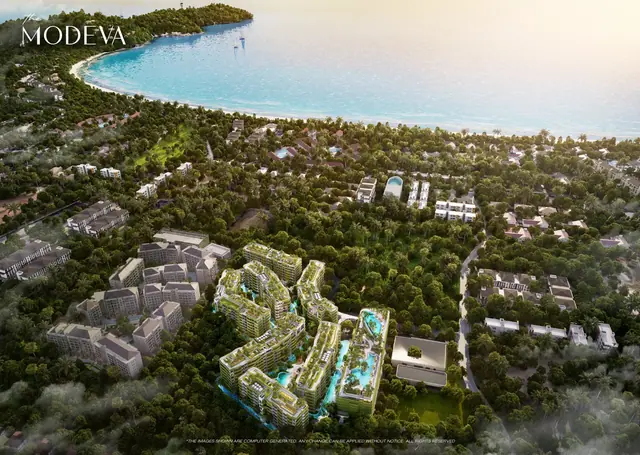
Why buyers buy off-plan
Off-plan sales fund much of Phuket's new supply. Buyers are offered staged payments, the pick of layouts and views, and prices below those expected at completion. Of the 174 projects in our Phuket catalogue, 102 are under construction and 29 are in pre-sale, and 70 have completion dates in 2027. The price difference between stages is visible in the data: completed condominium projects in our catalogue have a median of about THB 143,000 per square metre, similar to under-construction projects at about THB 154,000, which is a reminder that off-plan does not automatically mean cheaper. Compare the specific unit, not the stage.
The trade-off is risk. Until completion and registration at the Land Office you hold a contractual claim against the developer, not a title deed.
The main risks
Understanding what can go wrong makes it easier to know what to check.
- Delay: construction runs late, sometimes by years, and contract penalties may be small.
- Non-completion: the developer runs out of money or loses its permits.
- Permit problems: the EIA or building permit is not approved, is challenged or does not cover what was sold.
- Specification changes: smaller units, different materials, changed facilities or a different view.
- Quota and structure: the unit you paid for as foreign freehold ends up offered as leasehold.
- Rental promises: guaranteed returns that depend on the developer's solvency and are priced into the unit.
Check the land and the permits
Start with the land. The developer, or its landowning company, should hold a full title deed (Chanote) for the site, and you should know whether it is mortgaged to a bank financing construction. That is normal, but you need to know how units will be released from the mortgage at transfer.
Condominium projects of 80 or more units, or with 4,000 square metres or more of usable area, require an approved Environmental Impact Assessment from the Office of Natural Resources and Environmental Policy and Planning before construction; projects near the coast face additional scrutiny. Ask for the EIA approval letter and the building permit, check that the permit matches the number of floors and units being sold, and check that the zoning allows the use. Selling before approvals are in place is common, so the question is what the contract says if they are refused.
Check the developer
A developer's history is the best predictor of completion. Look at completed projects, visit them, speak to owners and to the juristic person managers, and compare what was promised with what was delivered. Search the Department of Business Development records for the project company, its registered capital, directors and filed accounts. Listed developers publish financial statements through the Stock Exchange of Thailand. Ask whether the project is financed by a bank loan, which implies the bank has reviewed it.
In Phuket, many projects are sold by developers with several completed buildings; others are single-project companies. Neither is disqualifying, but a first project calls for more protection in the contract.
Ask directly what happens if sales are slower than expected. A developer with a bank construction loan or strong existing cash flow is better placed to keep building through a slow period than one relying on buyer instalments alone. Its answer, and whether it can document it, tells you a lot.
Read the reservation and sale contracts
Since 31 January 2025, condominium reservations in Thailand are a contract-controlled business under a notification of the Office of the Consumer Protection Board. Reservation contracts must follow a prescribed form in Thai, may not treat the reservation fee as a non-refundable deposit, and must give the buyer the right to terminate and receive a full refund within 15 days (cash or transfer) if, for example, the developer fails to obtain permits, alters the project without consent or does not offer the sale contract on time. Developers who breach the notification face penalties including fines of up to THB 200,000.
The main condominium sale agreement must also follow the standard form required under the Condominium Act, which includes buyer-protective terms. Your lawyer should check the English translation against the Thai version, the completion date and delay penalties, the specification schedule, the unit area tolerance and price adjustment, the foreign quota confirmation and your right to terminate and recover payments. Villa contracts are not covered by the condominium standard form, so they need even closer review.
Payment schedules and escrow
The safest schedules tie instalments to construction milestones that you can verify, with a substantial share payable only at transfer. Heavily front-loaded schedules put more of your money at risk before there is anything to show for it. Thailand has an Escrow Act that allows payments to be held by a licensed escrow agent, but its use in property sales is optional and uncommon; if a developer offers it, that is a plus.
Remit every instalment from abroad in foreign currency with the purchase purpose stated, and keep the FET form or credit advice for each one, or you may have trouble registering freehold title at the end.
Currency and timing risk
Off-plan payments are usually spread over one to three years and priced in Thai baht. If your savings are in another currency, exchange rate movements between the first deposit and the final payment can raise or lower your effective price. Some buyers convert a large share of the purchase money early; others spread conversions over the schedule. There is no right answer, but it should be a deliberate decision, not an accident.
Timing risk also includes your own circumstances. If your plans change before completion, check whether the contract allows you to transfer your position to another buyer, what fee the developer charges for this, and whether the foreign quota position will carry across to the new buyer.
Rental guarantees and branded projects
Many Phuket projects advertise guaranteed rental returns for a number of years. A guarantee is only as strong as the company that gives it and the contract behind it. Check who pays, how the rate is calculated, whether the guarantee is netted off the purchase price and what happens after it ends. For branded residences, check the actual management agreement with the hotel operator rather than relying on brochure language. A guarantee does not change the rules on short-term rentals, which are covered in our rental licensing guide.
At completion
Before transfer, inspect the unit with a professional snagging inspector, check the actual area against the contract, confirm the building has its occupancy permit and condominium registration, and check the common area fee and sinking fund charges. Only then pay the balance and register the transfer at the Land Office. If defects remain, agree in writing how and when they will be fixed.
Keep the defects list, photographs and all correspondence; they will be useful if issues appear during the warranty period stated in your contract.